This article explains the basics, techniques, applications, and future of image segmentation in computer vision and AI.
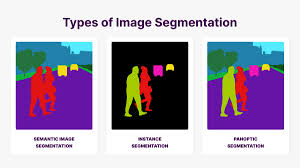
Image segmentation is a pivotal task in computer vision and image analysis, crucial for extracting meaningful information from visual data. But what is segmentation in image processing exactly? In essence, it refers to dividing an image into multiple segments or regions, each representing a specific part of the image such as objects, boundaries, or textures. Unlike simple image classification that categorizes an entire image, segmentation works at the pixel level to assign meaningful labels, enabling machines to understand and interpret the contents of an image with remarkable precision.
Understanding image segmentation is vital for anyone working with AI, computer vision, or any technology that relies on visual data. It unlocks the ability to perform complex tasks such as object recognition, scene understanding, and image editing, impacting industries from healthcare to autonomous driving.
In recent years, the demand for accurate image segmentation has soared alongside advancements in AI and machine learning. According to a report by MarketsandMarkets, the global computer vision market size is expected to grow from USD 11.3 billion in 2021 to USD 19.1 billion by 2026, with image segmentation being a key driver of this expansion.
Image segmentation is the backbone for many AI-driven applications. For example, in medical imaging, it helps radiologists detect tumors, segment organs, and analyze tissue structures, leading to faster and more precise diagnoses. Autonomous vehicles use segmentation to differentiate between road surfaces, pedestrians, other vehicles, and obstacles, enhancing safety and navigation. In agriculture, segmentation helps monitor crop health by identifying plant regions and detecting pests or diseases from aerial images.
At its core, image segmentation aims to cluster pixels into meaningful regions. These regions share common characteristics like color, texture, or intensity. The outcome is a segmented image where every pixel belongs to a specific class or object.
The process can be divided into several categories:
Before the deep learning revolution, classical methods dominated the field:
The advent of deep learning has transformed image segmentation. Convolutional Neural Networks (CNNs) have proven highly effective in automatically learning features from data. Models such as U-Net, Fully Convolutional Networks (FCNs), and Mask R-CNN are now standard in many applications.
Deep learning methods generally outperform traditional ones, especially on large, complex datasets. However, they require extensive annotated training data and significant computational resources.
Despite significant progress, image segmentation still faces key challenges:
Image segmentation powers numerous real-world technologies:
Research is ongoing to address current limitations and explore new frontiers:
Image segmentation is an indispensable technology that enables machines to comprehend visual data at a granular level. By dividing images into meaningful parts, it facilitates countless applications that improve safety, health, productivity, and user experience. While challenges remain, ongoing research and technological advancements continue to push the boundaries of what image segmentation can achieve.
For those looking to leverage cutting-edge AI and data annotation solutions, Mindy Support offers expertise and innovative services tailored to modern industry needs, helping businesses harness the full potential of image processing technologies.