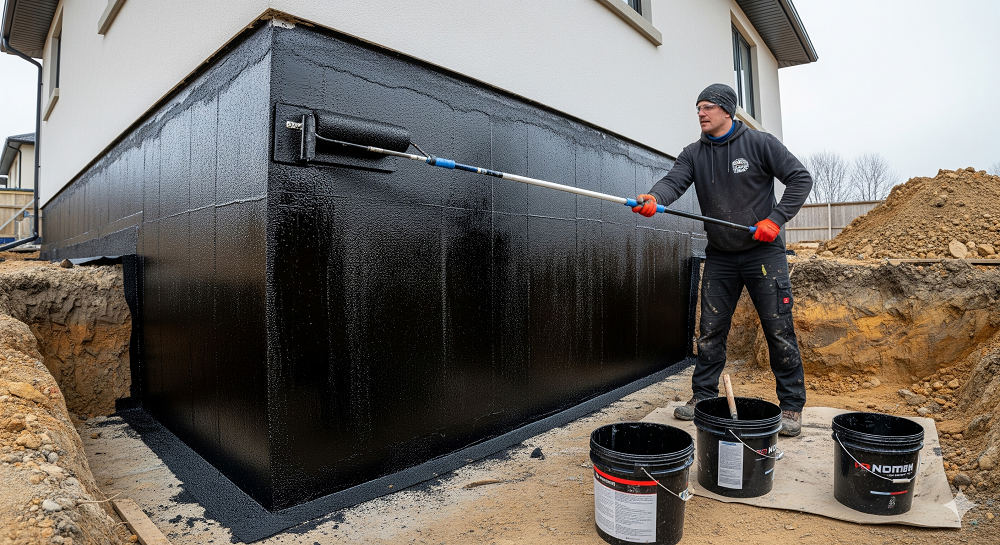
Here is how to Secure Backup Power and Infrastructure for Industrial Facilities.
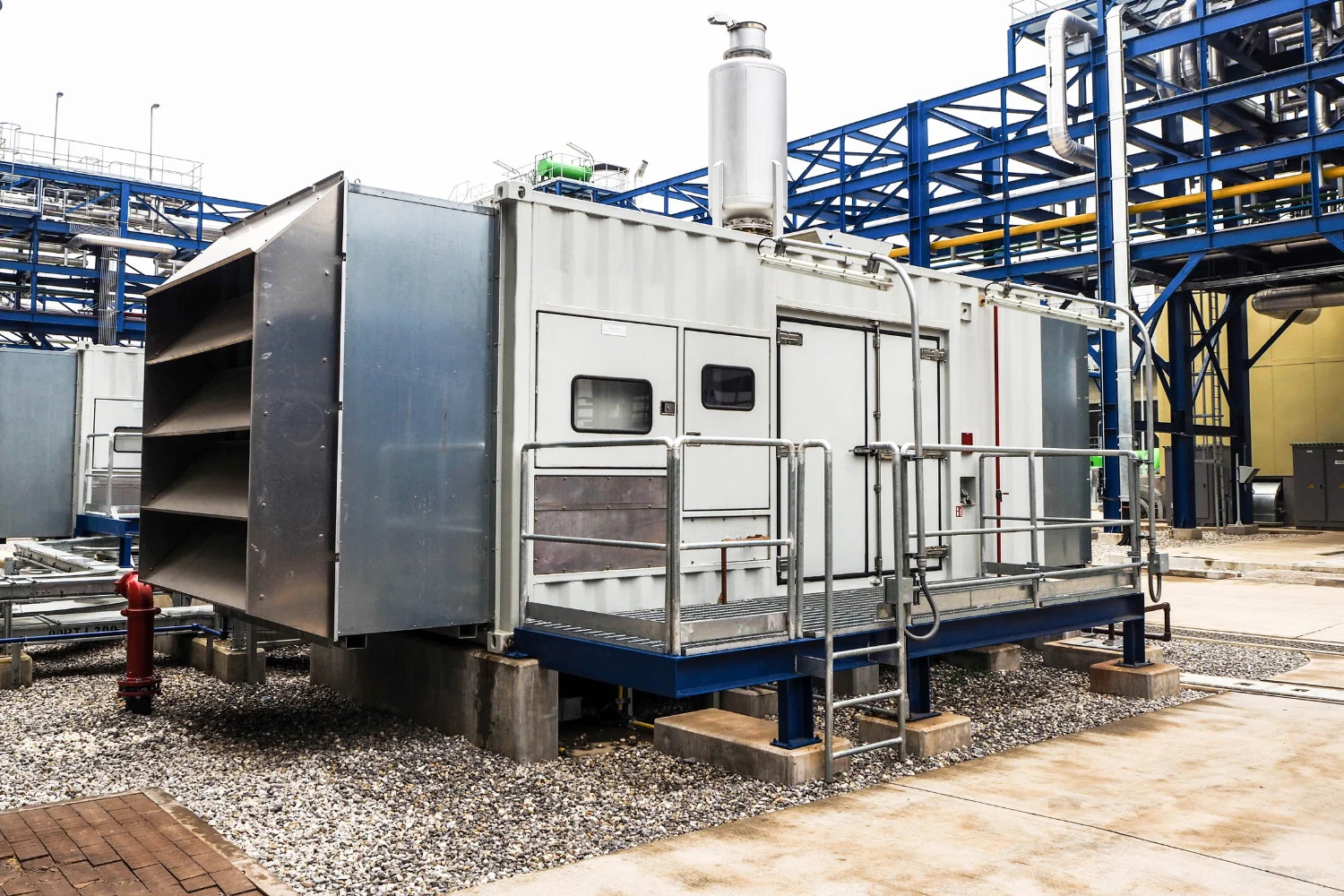
Power continuity is not a building issue - it's a liability. For factories and active construction sites, an unplanned supply interruption doesn't merely stop work; it causes system damage, material loss, safety shutdown, and contract penalties that escalate by the minute. Designing a truly dependable electrical system involves more than just adding redundant generators.
Before specifying any backup power system, you need a clear picture of what's on your site and how much it actually matters.
The standard breakdown is three tiers: critical (life safety, fire suppression, emergency lighting, PLCs, SCADA), essential (process HVAC, production lines, refrigeration), and non-essential (general lighting, admin, ancillary kit). The distinction drives everything downstream. Oversize to cover non-essential loads and you're wasting capital while running generators at light load - which causes its own problems. Undersize against critical loads and you've built in the failure you were trying to prevent.
Don't think about load purely in kilowatts either. Control systems and VFDs are far more sensitive to harmonics and voltage sags than a pump or resistive heater. Your most demanding power quality requirements often sit at the critical tier, and they set the standard for the whole system.
Get the audit right before anything else gets specified.
In industrial backup power, one of the most frequently observed failures is sizing the system based only on the steady-state running currents - i.e. 'nameplate data' of the machinery to be supported by the generator. Unfortunately, that practice overlooks the reality that most heavy machinery (compressors, large HVAC units, conveyor drive motors, hydraulic power units) demands three to six times the running current for the first few cycles of startup. The inrush, or surge demand, that the motor imposes on the generator creates a temporary voltage dip across the generator's output.
If that dip is deep enough, it causes other loads on the same bus to trip their protection breakers, or sensitive controls to sense the sag as a fault and shut themselves down. In a cascading failure, you have multiple systems offline despite the fact that your generator is running just fine. The solution is to size the motor-starting load by calculating the locked-rotor current (LRC) of each major motor, and then establishing a startup sequence that staggers these demand peaks. The generator is rated in KVA (kilovolt-amperes of apparent power), with sufficient transient headroom above its continuous 'steady-state' rating so it can absorb these demand peaks without collapsing output voltage.
Specifying this equipment based only on running load kW is an engineering shortcut that will cause you no end of real-world trouble.
Pre-installed standby generators at a primary distribution point are fine for permanent structures, but for active construction sites and remote industrial operations, they quickly become more trouble than they're worth. Running cabling hundreds of meters across a shifting work site necessitates time-consuming, hazardous cable bridging over roadways, watercourses, and other site traffic, while dozens more long cable runs leak power in the form of crippling voltage drop. Far-flung workers quickly become cabling experts as they learn the power-sapping inefficiencies of relying on a central grid. Temporary breakages, routinely un- and replugged connectors, and frequent re-terminations chew valuable time from construction schedules and lead to more frequent junction box failures and the fires and toxic smoke that these cause.
Extend power over a distance, and it will degrade. The only way to ensure a construction operation has full power is to put the generator where the power is needed. Deploying rugged, high-performance portable generators lets workers position power at the point of demand - whether that's a remote pump station, a temporary batch plant, or an isolated work area where the main distribution board can't reach without a dedicated cable run. They also provide immediate local redundancy if the primary distribution panel trips or a feeder cable fails, letting work continue in unaffected zones while the main fault is isolated and cleared.
For construction site operations, the generator's IP (Ingress Protection) rating matters as much as its power output. Equipment operating in environments with heavy dust, driving rain, or high humidity needs enclosures rated to withstand those conditions continuously - not just in controlled conditions. A generator that performs well on a dry commissioning test but fails during a wet earthworks phase isn't reliable infrastructure.
According to the Information Technology Intelligence Consulting (ITIC) Global Server Hardware Security Survey, 91% of mid-sized and large enterprises report that a single hour of unplanned downtime costs over $300,000 - with 44% reporting costs exceeding $1 million per hour. On a construction project where crane time, concrete delivery, and subcontractor labor are running simultaneously, those figures are not abstract.
A backup generator is not going to start immediately. Before an Automatic Transfer Switch (ATS) detects a mains power failure and sends the start command, a diesel unit may need 10 to 30 seconds to begin cranking, start running, stabilize its output frequency, and be ready to accept the transferred load. For most manufacturing equipment, the delay is not a problem. But, for data systems, process control, and loads requiring a continuous power supply it is devastating.
This is where the double-conversion Uninterruptible Power Supply (UPS) steps in. The UPS does not wait for the generator. It is an online system already providing regulated DC power converted into AC power. It is the only system providing the critical load with power during what is known as the dead time between mains power failure and the generator supplying stabilized power. Once the generator achieves stabilization, the UPS continues to correct and regulate the power.
The UPS and ATS have to work as a single engineered system, not as two separate systems installed independently. The generator ATS has to be programmed to transfer the load only after voltage and frequency have come within acceptable tolerances - typically ±2% on frequency and ±5% on voltage. Otherwise, transferring outside those limits can overload the operating UPS and cause internal failures of the UPS power source.
Active construction poses a different set of problems than typical power planning for a fixed facility. For much of the early construction phase, traditional utility power isn't available at the remote site. Construction activities themselves may require the power system to be relocated, often at short notice. And, when utility power is supplied via temporary connections and cables intended for only a fraction of the capacity of the final distribution system, it's likely to be neither reliable nor the best choice for primary power for the worksite.
The dynamic work zones on a construction site create further problems. The temporary power distribution system must keep pace with the evolving site activities, often made more challenging for projects that call for work on multiple structures to progress simultaneously. New structures and footprints frequently get built across the path of existing cables and distribution, necessitating rerouting. And on a typical site, the position of temporary distribution boards during close-in work will no longer meet OSHA requirements for general construction work and the boards will need to be relocated for the final trades.
New high-power-draw equipment will be brought into zones of temporary construction power, often not in a considered manner since the construction crews have quite enough to keep track of in building the structure itself.
Diesel fuel, if stored, is far from a stable commodity. Over time - usually 6 to 12 months in warm or humid conditions - diesel begins to oxidize, producing gum and sediment, while microbial growth becomes established at the water-fuel interface within the tanks. Fuel becomes a sludge that will block injectors and foul filters destroying generators when they are most needed.
Pro-active fuel management for standby and site generators demands quarterly fuel sampling and laboratory analysis to check for water, microbial contamination, and excessive sediment. Contaminated tanks must be cleaned by fuel-polishing, transferring the fuel through both filtration and centrifugal separation before it returns to the generator.
Bunding, the secondary containment sill around fuel storage tanks, is both a regulatory requirement and a sensible risk control. A diesel spill from a tank rupture or over-fill event is an environmental liability and a potential site safety disaster without adequate bunding.
For particularly critical facilities and major construction projects, dual-supply fuel contracts (wherein two completely independent suppliers are contracted) can provide insurance against a single fuel supplier also being unable to deliver due to a region-wide emergency that takes down the grid.
A generator that fires up every week during its no-load run is no more reliable than a car is a good car because the tires are holding air. That light-load (or no-load) exercise allows a phenomenon called wet stacking to occur. Unburned fuel in the diesel's exhaust because combustion temperatures are not high enough to incinerate it causes wet stacking. This contaminates the exhaust system, resulting in the loss of performance integrity of the generator's fuel injectors, a "coking" (coating) of the exhaust valves, and an actual electrical output capacity well below the generator's published KVA rating.
An annual test at 100% of the rated KVA output is the accepted minimum presentation standard for any emergency generator system. Called load bank testing, a test load consisting of a resistive artificial load is electronically attached to the generator set while the generator is placed into automatic mode and brought to operational temperature. The generator is run for an hour or two in this mode to ensure that the generator set will maintain the published KVA output. This load also burns the wet-stacking carbon and residue.
Restoring power from a completely de-energized state, a "black start," requires a sequence different from a normal generator transfer. There is no utility to reference, no synchronization target, and, as we know from many real-world events, the kinds of errors that occur when stress impacts personnel include skipping steps that matter.
An effective black-start procedure includes confirming that all non-essential loads are isolated before attempting to start the generator; ensuring the generator is started and the voltage and frequency checked and confirmed stable before closing any distribution breakers; energizing critical loads first in a prescribed sequence; and verifying the operation of communications and safety systems before restarting production. It also specifies the responsible person who may start and who must approve each step, and the conditions under which the restart should be aborted and waiting for utility restoration is the proper course of action.
This detailed procedure should be posted at the generator control panel, where it will be used, not in a book in the office of a maintenance manager, and it should be tested in an actual drill, not just reviewed during a simulated tabletop exercise.
Power continuity planning at the industrial level is asset management with engineering consequences. The facilities that handle outages well aren't the ones with the most equipment - they're the ones that understood their loads, sized their systems correctly, and maintained them as working infrastructure rather than insurance policies sitting idle in a plant room.