Know here What Really Happened During the United Airlines Flight UA770 Emergency Diversion.
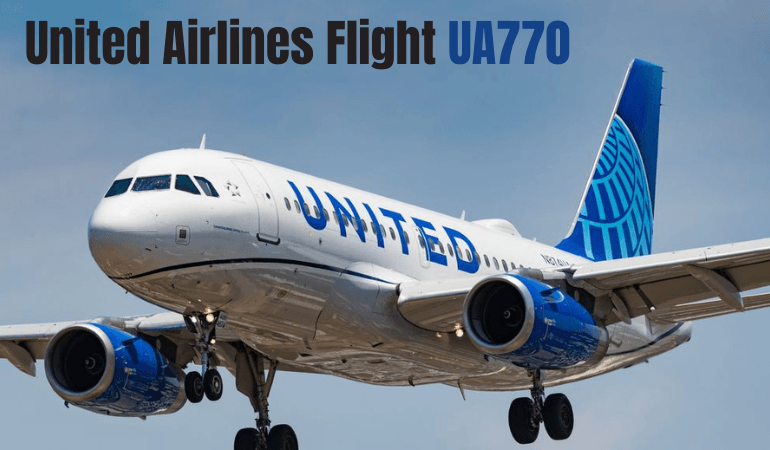
Imagine being on a plane waiting to land in a different country when all of a sudden the pilot calls out that there is an emergency. This is what happened during the United Airlines flight UA770 emergency diversion. The plane took off like any other, but soon the crew had to make a quick choice to keep everyone safe.
Today, in this article, we're going to talk about what happened on that United Airlines UA770 flight and how the people on board felt. Let's look at how a normal trip turned into an emergency, and luckily, everything turned out well in the end.
“Flight UA770” from “United Airlines” was supposed to be a long trip across the ocean. The plane was a Boeing 787-9 Dreamliner, which is one of the safest jets for foreign transport. There were more than 200 people on board, including passengers and workers.
The journey started in Barcelona, Spain, with Chicago, USA, as the final stop. The weather was clear, the takeoff was smooth, and the cabin was calm. Travelers were relaxed and settled into their seats.
For a while, everything looked just like any other flight. But hidden inside the systems of the aircraft, a problem was slowly starting to show. No one in the cabin could see it earlier, but soon, the situation took a very different turn.
Unfortunately, ninety minutes after the plane’s takeoff, things started to change. The pilots could see warning lights inside the aircraft. The system indicated that the air pressure was off, which was serious at high altitudes.
Without any delay, the pilots sent out a special code called “Squawk 7700.” This number tells air traffic control that the plane is in an emergency. After receiving the code, the controller ordered other planes to move aside to clear the path for an emergency landing.
In the cabin, passengers felt the plane starting to drop. The crew explained to the travelers that the flight would not continue as planned. The pilots had chosen to head for another airport, where help was ready. This marked the start of the United Airlines flight UA770 emergency diversion, a step taken to keep every person safe on board.
Remember, in this type of situation, the pilots must always choose a quick landing. For Flight UA770, the safest option was to change its route and head to “London Heathrow.” This airport has long runways, strong rescue teams, and the right tools to check a Dreamliner. Moreover, the air traffic controllers cleared the sky so the flight could move without delay. Passengers were told to stay calm, and many were relieved to know a safe landing was coming soon.
After a careful descent, the aircraft touched down smoothly. Fire trucks and medical staff were nearby, but luckily, no one was hurt. The crew guided everyone off the plane in an orderly way. What had started as a normal trip was now remembered as the United Airlines flight UA770 emergency diversion, a story of safety over risk.
Inside the cabin, the mood was mixed. Some people were nervous when they felt the plane descend, while others stayed quiet and trusted the crew. On the other hand, a few passengers said the sharp turn and drop in altitude made them realize something serious was happening.
However, the flight attendants acted very well to make the travelers feel relaxed. The crew team made sure that safety measures were already in place.
After landing, many travelers shared their stories online. On X (Twitter), Instagram, and TikTok, posts spread quickly. A few people praised the team for keeping things professional. Some people said that although it was scary, it was handled well.
Soon, people all over the world were talking about the United Airlines flight UA770 emergency diversion.
Right after the landing, United Airlines released a short statement. The airline said the crew followed safety rules, and luckily, all people were safe. Also, the company helped its passengers by offering hotel rooms, meal vouchers, and rescheduling their flights.
By performing wisely, the airline showed that its top goal was human life safety. Although the United Airlines flight UA770 emergency diversion was just a safety measure, it highlights the importance of quick response.
Later, reports pointed to a pressurization alert as the main reason for the diversion. This system keeps the air inside the cabin safe to breathe. Even a small warning needs quick action because high altitude can be risky without pressure control.
The pilots and crew followed their training step by step. Air traffic control gave full support, and rescue teams were ready on the ground. In short, the United Airlines flight UA770 emergency diversion status showed how safety systems, people, and plans all worked together at the right time.
The United Airlines flight UA770 emergency diversion was more than a travel delay. It was a real test of how training, teamwork, and safety systems work in the air. What began as a normal flight unexpectedly turned into an emergency. Yet at every step, the pilots, the cabin crew, and the ground staff acted with skill and high precision, and care.
Although passengers felt fear at first, they also saw how calm guidance could make a hard moment easier. Later, many travelers praised the way the crew handled the situation. United Airlines helped on the ground, showing once more that safety comes before timetables.
Verily, this event also reminded the wider aviation world of important lessons. Emergencies are rare, but they can happen at any time. Quick choices, clear communication, and strong training protect lives. We wish such emergencies don’t happen any often.