Understanding the challenges—and how to overcome them—can make the difference between a claim that stalls and one that is grounded in facts.
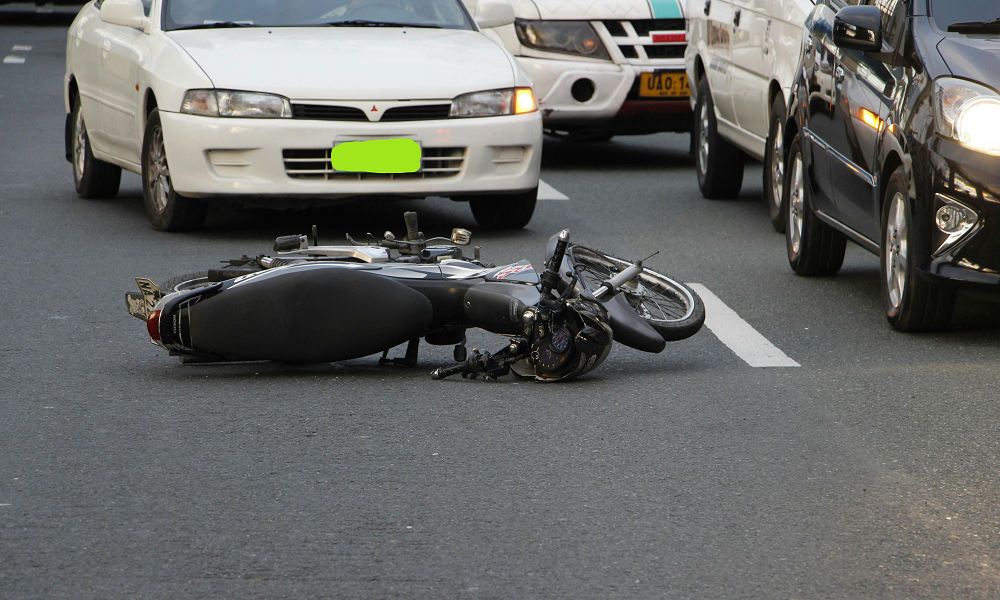
Motorcycle crashes are not “just like car crashes, only smaller.” They present distinct hurdles for proving who was at fault because of visibility issues, physics, stereotypes about riders, and differences in the evidence available after a wreck.
This article has been provided by the Castro Law Group. If you have been injured in a motorcycle accident and need help with getting the compensation you deserve, reach out to a personal injury law firm today to discuss your case.
Most multi‑vehicle crashes involving motorcycles occur at intersections, frequently when another driver turns left across a rider’s path. Smaller vehicles create a smaller visual profile; drivers often misjudge speed and distance, a human‑factors phenomenon sometimes called the size–arrival effect. Even attentive riders are vulnerable when a turning vehicle commits to a gap that is too small.
Why does it complicate fault? The turning driver may insist the motorcycle “came out of nowhere.” Proving fault often requires showing that the rider was visible and had the right of way—and that the other driver either did not look effectively or misjudged the closing speed. Evidence that helps includes sight‑line photos from the driver’s perspective, headlight/gear conspicuity, and timing diagrams derived from video or event data.
Stereotypes that riders are risk‑takers can seep into witness statements and initial police assessments. That bias may lead investigators to overemphasize speed or speculate about lane‑sharing even when there is no supporting evidence. In civil claims, jurors who do not ride may similarly assume higher risk‑taking by default.
How to neutralize it? Anchor the analysis in objective data (timelines, physical evidence, telemetry) and emphasize that protective gear choices do not determine fault. Fault turns on right‑of‑way, lookout, safe speed for conditions, and compliance with traffic controls—not on whether the rider wore a particular jacket.
Modern motorcycles with ABS and grippy tires may leave no or shorter skid marks, even during heavy braking. Low‑sides can produce faint scuffs rather than long black streaks. Bikes also create less crush damage than cars, making speed reconstruction via vehicle deformation more difficult. Unlike most passenger cars, many motorcycles do not record robust event data (EDR) that captures pre‑impact speed and control inputs.
Some workarounds are:
Video sources
Nearby businesses, traffic cameras, transit buses, residences, and dashcams. Helmet‑cam and bike‑mounted cameras are increasingly common.
Telematics
GPS apps, ride‑tracking devices, phone location histories, and smartwatches sometimes provide speed and path data.
Photogrammetry
High‑resolution photos and scene mapping (drones or total stations) can reveal tire scuffs, scrape marks, and debris paths that speak to angles and speeds.
Other vehicle data
The car or truck involved often has an EDR; downloading it can answer critical speed and braking questions.
Riders frequently swerve or “lay it down” to avoid a turning vehicle or sudden hazard. To an observer after the fact, the bike on its side can be misread as reckless riding, when it was actually an emergency maneuver to mitigate injury.
Proof strategy: Map the rider’s pre‑impact path using curb strikes, gouge marks, and light scuffs that trace the trajectory. Pair that with video timing to show that a reasonable rider had no safe alternative when another driver violated right‑of‑way.
Many motorcycle crashes do not involve another vehicle—but that does not automatically equal rider fault. Loose gravel in a corner, a pothole, steel plates, or raised pavement markers can cause a loss of traction. Fluids, improperly placed construction signage, or a vehicle that encroached and fled can also trigger a crash.
Proof strategy: Document road surface defects promptly and track maintenance or construction logs. Vehicle residue (e.g., oil) can be matched to a leaking source. In some cases, claims involve public‑entity notice rules and shorter deadlines.
Most states use comparative negligence, so each party’s share of fault reduces recovery proportionally. Defendants sometimes argue that a rider’s speed, lane position, or helmet/non‑use contributed to the harm.
Nuance that matters:
Fault vs. injury severity
Whether a helmet was worn rarely affects fault for the crash. In some jurisdictions, helmet non‑use may not be admissible to reduce damages; in others, it can factor into injury causation.
Lane position and “invisibility”
Reasonable lane positioning to increase conspicuity or create escape routes is part of prudent riding and generally does not indicate fault.
Lane splitting
Laws vary widely. Where it is illegal, improper lane sharing could increase a rider’s fault share; where permitted or tolerated, the analysis turns on whether it was done prudently for conditions.
ABS has been associated with lower crash and fatal‑crash involvement rates, likely because it reduces wheel lock and preserves steering control under hard braking. Daytime running lights, auxiliary lighting, and high‑visibility gear can improve conspicuity. While technology does not determine liability, it can rebut claims that a rider failed to brake or was “impossible to see.”
When the other vehicle is a commercial truck, cases become more complex. Federal Motor Carrier Safety Regulations govern driver hours, vehicle maintenance, cargo securement, and drug/alcohol testing. Evidence such as electronic logging device (ELD) data, dispatch communications, and maintenance records can show fatigue, unsafe schedules, or mechanical defects.
Takeaway: Truck cases often add defendants (carrier, owner‑operators, brokers, maintenance contractors) and layered insurance policies. Preserving corporate records quickly is crucial.
Preserve the motorcycle and gear
Do not rush repairs. Helmets, jackets, and boots can carry impact marks that reveal angles and forces.
Collect video early
Request footage from nearby businesses and residences within days; many systems overwrite files quickly.
Download data
Secure the other vehicle’s EDR; save your phone’s location history and ride‑tracking data.
Photograph the scene immediately
Include wide shots, sight lines, traffic controls, and close‑ups of scuffs, gouges, and fluid trails.
Identify witnesses and capture contact info
Ask about what they saw before the crash (turn signals, lane position, traffic light phase), not just after.
Request official records
Police crash reports, 911 audio, traffic‑signal timing charts, and road‑maintenance logs can be pivotal.
Document injuries promptly
Delayed care weakens the link between the crash and symptoms; describe the mechanism of injury to clinicians (e.g., “high‑side with shoulder impact”).
In serious cases or where liability is disputed, accident reconstruction can translate scattered clues into a coherent narrative. Experts combine human‑factors analysis (perception‑reaction time, conspicuity), physics (speeds, vectors), and forensic mapping. For jurors who do not ride, clear visuals—animated timelines, drone‑based orthomosaics, and EDR‑based speed graphs—can counter bias and clarify how quickly a left‑turning car can leave a rider with no safe option.
Proving fault in a motorcycle crash often means fighting on two fronts: physics and perception. Riders face visibility challenges, less obvious roadway evidence, and cultural bias. The antidote is meticulous evidence work—video, data, scene mapping, and expert analysis—paired with a careful explanation of riding strategies and right‑of‑way rules. When those pieces are in place, what first looked like an unavoidable “motorcycle came out of nowhere” event often resolves into a preventable, clearly assignable mistake.