Here is a complete Guide to Self-Petitioning for a Green Card Under VAWA.
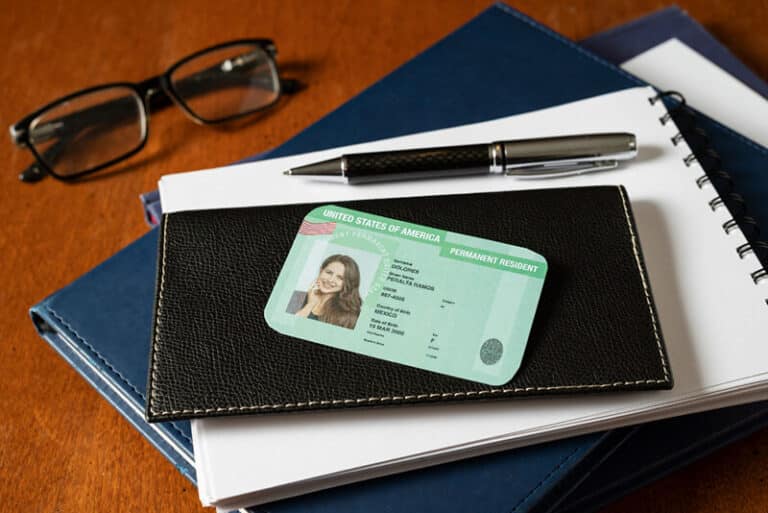
Survivors of domestic abuse can apply for a green card without the abuser's help thanks to the Violence Against Women Act, a landmark piece of legislation that recognized that abusers often use their victims' immigration status as a tool of control.
Most people think of VAWA self-petitions in the context of abused spouses, but the law is broader than that.
Abused spouses of U.S. citizens or lawful permanent residents are by far the largest group of applicants. The self-petition does not set assumptions about the applicant's gender or the family dynamic, so there are no differences in the type of application based on the abusive spouse's gender. Abused children may also self-petition, and the age cutoff is higher than the general 21 year rule. If the abuse is the reason the application was not filed in a timely manner, USCIS may accept applications from individuals up to age 25. Abused parents of adult U.S. citizens may also self-petition, but this is a less known category and it is only available if the abuser is a U.S. citizen (not an LPR).
One thing to clarify from the beginning: the qualifying relationship is assessed at the time of filing, so the couple must have been married at that point, but there is no requirement that the marriage should exist at the time of filing. Survivors who have already divorced their abuser can still apply, as long as the application is submitted within two years of the divorce and the abuse was related to the marriage.
The legal criteria to be eligible for VAWA are not restricted to actual physical harm. USCIS looks at the "battery or extreme cruelty" standard, and that term is defined broadly.
While physical assault is the simplest form of evidence supporting a VAWA case, the program recognizes other types of violence, including psychological and sexual. Non-violent forms of abuse, such as financial exploitation, threats to the person or their loved ones, including children, or property, and deliberately controlling basic living resources, such as money or medicine also meet the extreme cruelty test.
Emotional and Psychological Abuse encompasses all of the following:
Isolating, threatening, monitoring, financial control, and withholding are all categories VAWA petitioners can use to build their case on.
The Form I-360 petition requires evidence across several categories: proof of the qualifying relationship, proof of abuse, proof of shared residence, and proof of good moral character. When an abuser has withheld documents, destroyed records, or kept the survivor financially isolated, building this packet requires creative but legally acceptable alternatives.
For proving the bona fide marriage - that the marriage was entered into in good faith and not solely for immigration purposes - survivors can rely on joint photographs, text and email records, affidavits from friends or family members who witnessed the relationship, statements from neighbors or clergy, and rental agreements even if only one name appears. USCIS understands that abusers frequently control household documents. The standard is evidence that would satisfy a reasonable person, not a perfect paper trail.
For documenting abuse, the most powerful evidence is often a detailed personal declaration written in the survivor's own voice. This declaration should be specific - not "he was controlling" but particular incidents with dates, locations, and the survivor's physical and emotional response. Domestic violence shelter intake logs, psychological evaluations, statements from therapists or counselors, and records from hotline calls all carry weight. Medical records from any treatment connected to abuse, even if the records don't explicitly mention domestic violence, can support the timeline.
Working with a vawa immigration lawyer during this phase significantly reduces the risk of a Request for Evidence. RFEs are costly - not just in time but in the psychological toll of having to revisit and re-document trauma. An attorney familiar with USCIS adjudication patterns can help survivors structure their declaration to address the legal definition of extreme cruelty point by point, anticipating the gaps an officer might flag.
Survivors often postpone seeking legal status because they fear the process will put them in the sight of their abusers. The law directly confronts this.
Under 8 U.S.C. Section 1367, USCIS is prohibited from telling the abuser anything about a VAWA petition. Immigration cannot call the abuser as part of the adjudication. The abuser's information - including any lies the abuser has told about the survivor to immigration - can't be used against the petitioner. Even if the abuser calls USCIS themselves, they can't even confirm that a petition has been filed.
This is a concrete statutory protection, not a vague policy preference. It is written to specifically take the abuser's tool of threat away.
The processing period of the Form I-360 is slow. Taking a look at USCIS processing statistics, the average processing time for VAWA petitions can be anywhere from 24 to 38 months. For a survivor who has just managed to flee an abusive home, two to three years with no income and no access to any public benefits is out of the realm of the possible.
Enter the prima facie determination. As part of the early steps in the review process, a USCIS officer will look at the petition and decide if it is enough to make a basic case for the survivor. If it is, the officer will issue a prima facie determination letter. Not approval, but a preliminary finding that the survivor does appear to be eligible. That letter will make the survivor eligible to access certain state and federal benefits to support their journey through the waiting period. Housing assistance, healthcare, food assistance programs - many of these require that the applicant show they are a recognized VAWA petitioner in order to become eligible. The prima facie letter does that.
The key to getting that determination early is filing a full and substantively strong I-360 in the first place. If the initial submission is thin, lacking, or deficient in some way, the officer may not determine the prima facie has been made and the survivor will lose access to benefits for a big chunk of the processing time.
When the abusive spouse is a U.S. citizen, the self-petitioner is considered an immediate relative. This means there's no cap on available visas, and Form I-485 - the adjustment of status application - can be filed at the same time as Form I-360. Concurrent filing speeds up the overall timeline and gets the survivor into the green card queue sooner.
When the abusive spouse is a lawful permanent resident rather than a citizen, the self-petitioner falls under a preference visa category, which is subject to annual numerical limits. In this situation, the I-485 cannot be filed until a visa number becomes available - which means waiting for the priority date on the I-360 receipt to become current according to the State Department's monthly Visa Bulletin. The I-360 still gets filed immediately, but the adjustment of status piece has to wait.
Understanding which category applies at the start of the process matters because it affects the overall strategy - and because some survivors, not knowing this distinction, wait unnecessarily before filing the I-360.
If you have an approved or pending VAWA petition, you're eligible to apply for work authorization via Form I-765, along with relevant VAWA filings. The timing of I-765 eligibility depends on whether you're in the I-485 concurrent filing track or waiting for visa availability. Either way, you should file I-765 as soon as you're able if you have an approved or pending VAWA case, as an EAD can help you become financially independent from your abuser as early in the process as possible.
Every self-application for the Violence Against Women Act (VAWA) must demonstrate good moral character, and this is generally proven through the three years preceding the filing. Often, survivors with an arrest in their past mistakenly believe the good moral character requirement prohibits them from applying.
In reality, it might not. Good moral character bars are considered waived if the crime or crimes were connected to the abuse. That includes arrests that occurred as a direct result of physical, emotional, or financial abuse from the U.S. citizen or permanent resident spouse. Victims who were merely in fear of their abuser's misuse of the immigration system, or who were arrested because the abuser used the police and the court system to control and intimidate, make a similar case.
This isn't theoretical. Survivors have been jailed for refusing the abuser's demands or for spending household money on necessities, only to be told "rot in jail and get deported if you leave me." Misdemeanor criminal defense attorneys may simply not bother to articulate the background of the abuse to the court and the prosecutor, especially if the plea agreement clips litigation time. Often the survivor doesn't even know what the police report says. These cases are not rare.
The self-petition, filed on Form I-360, demands evidence of good faith marriage and abuse; factual and legal arguments demonstrating that your case meets each relevant requirement; and corroborating documents supporting every fact and argument in your case. (Only a tiny minority of documents and facts are exempt from the independent evidence/corroborating documents requirements.) In practice, a good filing continually reinforces every argument with evidence and every piece of evidence with argument which together demonstrate your eligibility.