Let's discuss the 7 Key Documents You Need to Prepare Before Applying for Permanent Residency.
Many individuals believe that collecting the papers required for a green card application is a check-the-box kind of thing. It's not. USCIS looks at every single piece of paper submitted, and one hole in the record - a forgotten translation, a non-certified civil document, an unsealed medical file - can lead to a Request for Evidence that tacks more time onto an already lengthy timeline. I-485 applications currently take between 8 and 22 months to process based on the field office, and an RFE can add an additional 3 to 6 months.
Preparing is not about quantity. It's about quality.
Begin here, as this is where the majority of applications fail. You must submit official civil documents: things like birth certificates, marriage licenses, and divorce decrees if you have any. Not copies, not hospital records - we're talking about papers that were issued and recorded by your country's applicable government department.
You'll also need to send a full certified English translation along with it. USCIS provides a super-specific definition of "certified": the translator must confirm their qualifications and that the translated info is correct. A casual translation from a bilingualist won't cut it. Nor will a computer's literal translation with a fancy signature squiggled at the bottom. Every. Last. Detail. Stamps, seals, all of it.
Form I-864 is a legally binding contract, not a mere formality. The petitioning sponsor needs to demonstrate income equal to or greater than 125% of the Federal Poverty Guidelines for their household size. To do this, USCIS requires recent federal tax transcripts - not just your returns - in addition to W-2s and recent consecutive pay stubs.
Tax transcripts are more important than tax returns because they are far more difficult to falsify. If the sponsor's income is insufficient, a joint sponsor is an option, but that individual must submit their own complete I-864 packet. Do not send partial documents here. An incomplete financial packet is among the most common RFEs.
More detailed information is required to be provided in this category than many candidates anticipate. It's not simply about proving your legal entry into the country. You must also prove legal maintenance of that status since you arrived. You need to provide a copy of your Form I-94 arrival record, visa stamps associated with your passport, and prior approval notices, including I-20s and I-797s.
For students and employment-based visa holders, applicants residing in the U.S. on a temporary visa who wish to pursue adjustment of status must prove their lawful entry. This process allows them to obtain their Green Card without returning to their home country for consular processing. If any of these forms are missing and you failed to maintain a legal status, you may not be able to apply for this form of relief. There may be some other alternative paths for you, but this one won't fit. If even a single one of these documents is missing, the entire package will be held up until you can supply satisfactory proof.
Form I-693 needs to be filled out by a USCIS-designated civil surgeon - your personal doctor won't do, nor will any old random clinic. USCIS keeps a list of approved surgeons, and only their reports are allowed.
That envelope the report goes in? It's key. Once the civil surgeon finishes the test, stuffs the report inside, and licks it shut, not one person can sneak a peek until USCIS gets it. If the flap has been lifted, your report is toast. Period. If it was a mistake, tough luck. You'll just have to start all over again. So plan that appointment for whenever your other paperwork is about done, because the report isn't good forever.
USCIS fraud detection isn't subtle about what it's looking for - agents are specifically trained to spot marriages of convenience, and marriage-based applications get scrutinised hard. The mistake most applicants make is waiting to be asked for proof. By that point, you've already created doubt. Come in with the evidence ready.
What actually moves the needle is a solid financial paper trail. Think joint bank account statements, a lease with both names on it, utility bills, shared insurance policies. Photographs are fine to include but on their own they prove very little, and the same goes for affidavits from friends and family - USCIS has seen plenty of glowing letters written for couples who barely knew each other. The money trail is what carries the weight. Build a clear, organised folder that tells the story of the relationship chronologically and makes it easy for an officer to follow without having to dig.
Your current passport and any expired passports you've held should be included. USCIS wants to see entry and exit records to verify continuous residence and identify any extended absences that could affect eligibility. Long trips outside the country during the application period can raise questions about whether you've maintained residence. Keep travel to a minimum once you've filed, and document any necessary trips carefully.
If you did travel abroad during the application period, don't just hope USCIS overlooks it. Build a paper trail. Gather boarding passes, hotel receipts, employer travel authorizations, or any other records that establish the purpose and duration of each trip. If you were outside the country for more than six months at a stretch, you may face a presumption that you abandoned your residence - and a simple explanation won't be enough to overcome it.
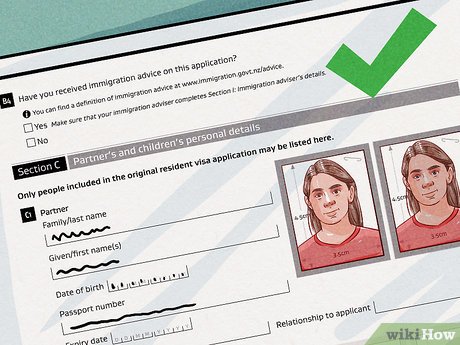
This may seem basic, and it is - but the reality is that photograph requirements are exact. The size, background color, and how recent they are all count. So, before you have the pictures taken, be sure to verify the current USCIS specifications. One of the simplest ways your application can get off to a bad start is to submit photographs that are not technically compliant.
Immigration law does not reward sweat equity. It rewards precision. The applications that move without interruption are rarely the most complicated - they're the ones where every document is correct, complete, and formatted to spec before you ever send it in the mail. Treat document preparation as your first legal argument, because in a real sense, it is.