Let's discuss What Makes a Compact Boom Sprayer Ideal for Small to Medium-Scale Applications.
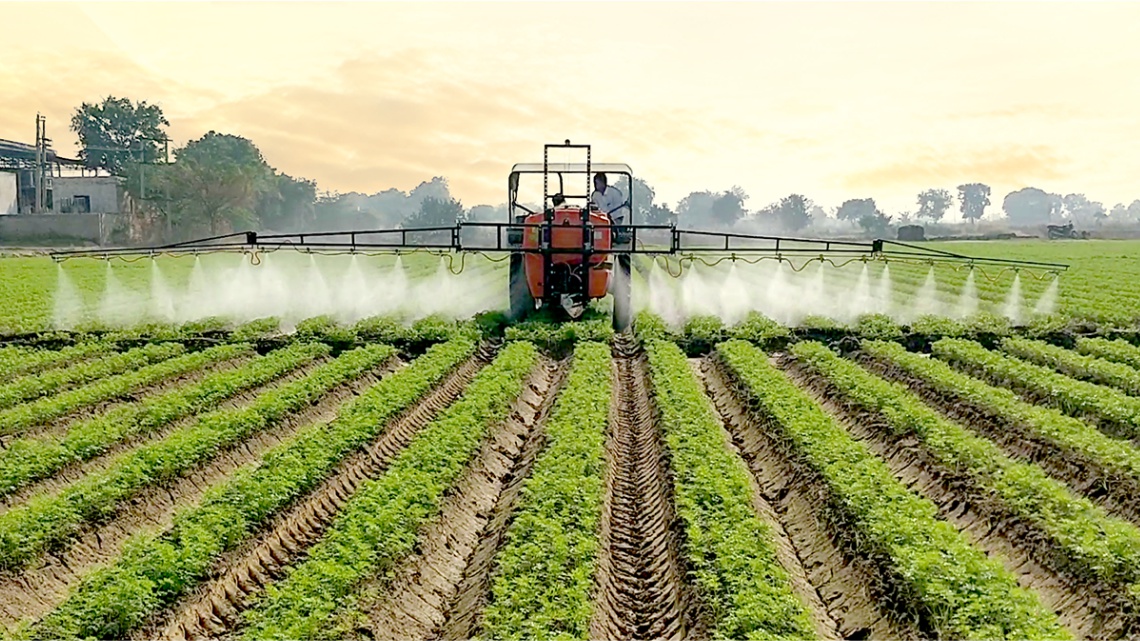
Big sprayers are built for big land. Most Australian farms are not. About 48% of farm businesses in Australia operate holdings under 500 hectares. For those operations, a full-size broadacre sprayer is over-engineered, hard to manoeuvre, and expensive to run. A compact boom sprayer fills the gap. It handles the application demands of small paddocks, hobby farms, market gardens, and roadside maintenance without the operational overhead of commercial-scale machinery.
In practical terms, compact means a boom width of 4 to 8 metres with a tank capacity of 100 to 400 litres. These units mount on a quad bike, small tractor, or ute. They weigh less than 300 kg fully loaded. That keeps them within the payload limits of light vehicles and allows operation on soft ground without compaction damage. The 6-metre boom is the most common size for small farms. It covers meaningful area without becoming unwieldy in tight paddocks.
Irregular paddock shapes are the norm on smaller holdings. Orchards have rows. Market gardens have beds. Hobby farms have trees, fences, and sheds in inconvenient spots. A 24-metre boom cannot fold around a fruit tree. A 6-metre compact boom can turn in a radius that matches a small tractor. That means fewer missed spots, less manual touch-up spraying, and faster completion per hectare despite the narrower width.
Shorter booms flex less. On rough ground, a 24-metre boom can wave up and down by half a metre between the centre and the tip. That variation kills application uniformity. A 6-metre boom stays much closer to level. Less flex means the nozzle-to-target height stays consistent. That directly translates to even spray overlap and predictable chemical rates. Field trials from Charles Sturt University have shown boom length is a primary driver of height variation at the nozzle.
12V electric pumps dominate the compact sprayer market. They run off the vehicle battery or a dedicated auxiliary battery. Flow rates on 12V diaphragm pumps reach 15 to 20 litres per minute at 5 to 8 bar. That is sufficient for flat fan nozzles at typical broadacre rates. PTO-driven pumps exist for tractor-mounted versions. Electric is preferred for quad bikes and utes because it is simpler to plumb and has no drive shaft safety risks.
Polyethylene is non-negotiable. It resists the full range of agricultural chemicals including glyphosate, 2,4-D, and most insecticides. Steel tanks corrode. They add unnecessary weight. They require inner coating maintenance. Poly tanks are lighter, chemically inert, and do not contaminate the chemical mix. Tanks should also have a flat base or positive drain so the full volume is usable. A tank with a rounded base wastes the last 5 litres every fill.
For operations under 200 hectares, yes. A quality compact boom sprayer costs between $1,500 and $5,000 depending on tank size and pump spec. A commercial 24-metre sprayer starts at $40,000 and goes well past $100,000 for GPS-guided models. The compact unit will not cover ground as fast. But on a 50-hectare hobby farm, ground speed is not the bottleneck. Availability, ease of use, and low maintenance cost matter far more.
Rinse the tank and lines after every use. Chemical residues sitting in lines between uses crystallise and block nozzles. Triple-rinse after herbicide use before switching to anything else. Check nozzle condition twice a season. Replace filters in the pump and boom line annually. Inspect boom pivot fittings and lock pins for wear. A compact sprayer maintained properly will last 10 to 15 years without major repairs.