Know here How to avoid scratches on your composite decking and protect it from damage.
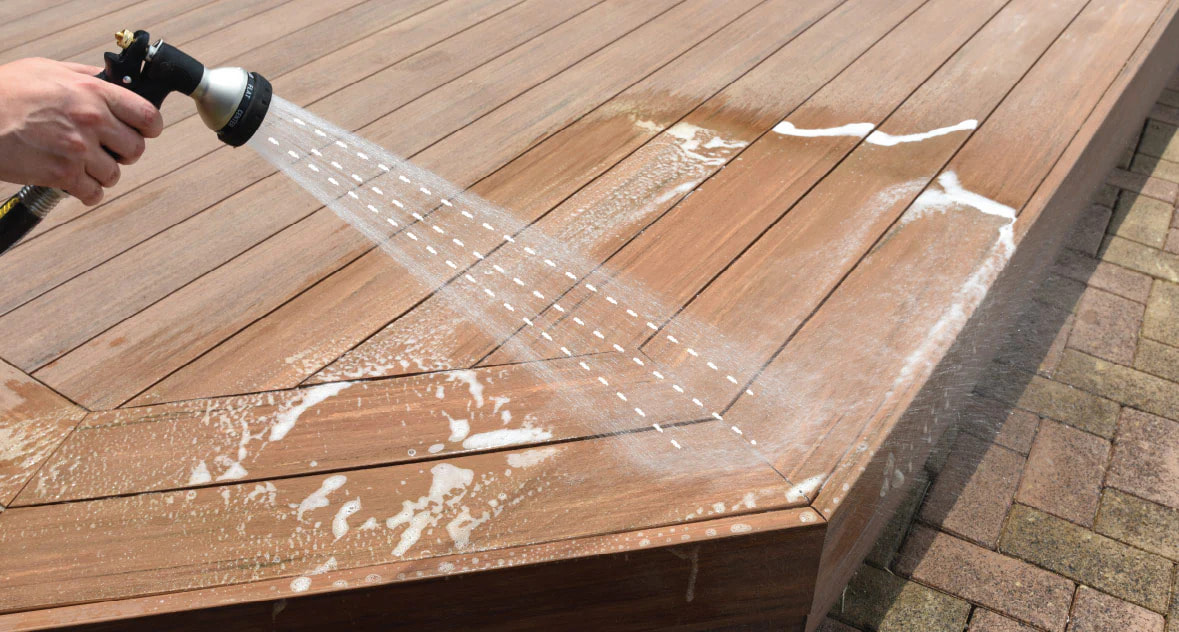
There is some degree of scratch resistance in composite decking. Extremely scratch-resistant is the feature. Having said that, there is a contrast. Diamonds are not used in the construction of composite decking; rather, it is made of recycled plastic and wood. Composite decking is very robust and long-lasting enough to resist high foot traffic and rough weather.
The composite deck you have won't scratch as readily as the wood deck would. However, there is always the possibility of scratches and scuffs, and there are methods that you can prevent scratches from appearing on the surface of your composite deck and care for it to ensure that it continues to look as it was intended to look.
A guide on preventing and treating scratches on your composite deck is provided here.
Your furnishings should be carefully selected
Select lighter pieces of furniture that have bases that are wider or legs that are thicker. When it comes to protecting your composite deck from scratches caused by table and chair legs, using furniture cushions is an excellent method to do it.
There is also a lot of interest in outdoor carpets. They are an excellent method for preserving your composite decking and protecting it from the elements, including your outdoor furniture, equipment, and foot activity.
Lift, rather than drag
Under no circumstances should you lift anything substantial over your composite decking. Not only does this apply to big toys, but also to furniture, crates, and equipment. It makes no difference whether the surface itself is capable of causing scratches. Sand or stones may get trapped and generate scratches on the surface of your composite decking.
Be mindful about wearing high heels
Shoes with high heels, particularly stilettos, have the potential to cause damage to any kind of flooring. When a person wears high heels, their weight is concentrated on a small area, which substantially increases the amount of pressure that is applied to the floor. Even for a very diminutive person who wears shoes, the pressure that may be exerted by a single tiny point on a shoe that is carrying a whole person might be enormous.
A rubber cap is often placed on the end of high heels in order to cushion the impact of the shoe. However, if the cover wears away, the nail may become revealed. This particular set of nails packs a very powerful and damaging blow, which has the potential to scrape or dent your composite deck. In a nutshell, visitors should not wear high heels on your deck, and you should also discourage them from doing so. They should be reminded that composite decking is safe to walk on barefoot, or they could be offered some flip-flops or hotel slippers as an alternative. Their feet, as well as your deck, will be grateful to you.
Pets
Gardening with our dogs is something that we enjoy doing very much. And one of the primary reasons why people choose composite decking in the first place is due to the fact that it is friendly to many kinds of animals. Such as a surface that is low in porosity and does not contain any splinters. Pets, on the other hand, have the potential to leave their mark on your composite deck with their sharp claws and their tiny mishaps.
Our recommendation is that you go for capped composite decking, which comes with a polymer covering that is very long-lasting, if you have dogs inside your home. The maximum degree of protection against scratches and general wear and tear is provided by this external coating, which also offers an additional layer of defense against odors and stains.
Take into consideration if you would want decking that is uncapped or capped.
As a rule, this is a challenging decision. Uncapped is often more affordable than capped. Uncapped decking, on the other hand, continues to outperform lumber on a daily basis, and also has the potential to be more comfortable to the touch and simpler to repair than uncapped types.
However, capping does provide additional protection against scratches and the fading effects of ultraviolet light. All composite decking, on the other hand, offers a scratch-resistant and long-lasting alternative to wood decking; the decision is ultimately up to your personal desire.
For more information on composite decking maintenance, please read this blog article.