Know here How a Custom Pool Layout Can Solve Difficult Backyard Terrain Issues.
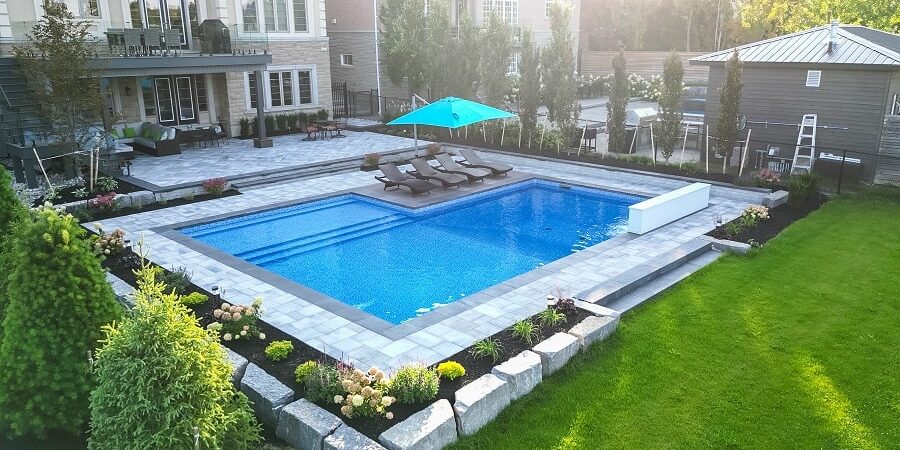
Many individuals think that if their backyard has a slope, is narrow, or rocky, they can't get a pool. However, this is not the case. A standard pool won't be suitable, but the issues that come with a slope, a narrow space, or a rocky ground are exactly the kind that custom pool installation is specifically designed to address.
You don't have to flatten a slope before building. It is costly and often redundant. Instead, use tiered landscaping and consider the slope itself as a unique element of your project.
For instance, a pool in a lower tier and a deck or recreation area in an upper tier will give you an amazing multi-level space. The pool takes the spotlight while the slope gives the illusion of an architectural marvel.
The same principle applies to out-of-ground design. When one or more pool walls are exposed above ground level, the pool shell becomes a containment structure providing support. This means you won't need to build retaining walls, saving you thousands of dollars.
Vanishing edge designs work so well with slopes for the same reason. When observers see water seemingly flowing over the edge into nothing, the effect is only possible because there is a steep drop below the pool. In this case, what seems like a flaw is actually a structural and aesthetic boon.
When your available space has a workable length but limited width (and fallow width that won't necessarily be impacted by repositioning some fences), think about your functions. A long, narrow pool is a plus, not a minus, if flanking alfresco areas step down or up to wider space at the back.
Functionally, it's about orienting the pool space to the area you want to link and enhance. You aren't making it obvious that the pool is long and thin. You're making it advantageous.
Soil stability and subterranean conditions account for a significant proportion of pool projects with those unseen blowouts on the final invoice. You can expect traditional excavation for a standard pool to run somewhere between $1,500 and $5,000, but if you're in terrain that needs rock removal or special shoring due to extremely steep slopes, you're going to pay another $5,000 to $15,000 on top of that.
The best way to keep costs down is to do a proper site survey before the design is locked in. Bring in a ground-penetrating expert who can confirm the presence of rock formations early enough that the pool's position or depth can be adjusted to allow the pool to sit directly on the rock. By just moving the pool's footprint 1.5 metres in one direction, you've saved yourself an entire blasting permit and all the hidden costs associated with working in or around unstable rock walls.
Areas of high water table don't just require hydrostatic relief valves to prevent the empty or partly empty shell from being literally pushed out of the ground by rising groundwater, they also demand careful design of underground drainage systems. Subterranean drainage blankets and French drains give the seeping water somewhere to go without creating a sustained pressure that compromises the structural integrity of the pool shell.
Again, these are areas where the builder makes all the difference. A company like Pacific Pools has built up generations of knowledge about local soil behaviours, rock types, and drainage patterns and can help make those early decisions on design and finishes that add long years of trouble-free enjoyment to your new pool.
Zoning rules, setbacks, and easements don't vanish because we're building a custom design - but a custom designed approach allows more freedom in engineering around them. Easements along a side boundary might exclude traditional location but allow for a pool with a narrower footprint and a different angle to the block.
Detailed survey work at the start of a project will pick all of this up - easement locations, setback requirements, service corridor locations and access points to the plot. Designing within constraints we know of isn't difficult. Unearthing them mid-excavation is expensive and embarrassing.
Decking and coping also must work with the grade changes the natural terrain of your block creates. Coping levels that step down with the landscaping are much more elegant solutions to this than butting coping tracks in the top of elevated retaining walls.
The point isn't to force a tricky block into a level and easy build pool. It's to create a pool that works for the block - its slope, its rock, its laws, its form. Custom pool installation is a thing because no two blocks are the same and the value of having something unique for your space far exceeds any savings you might have hoped to make by opting for a standard approach.