Let's discuss Why Parents Notice Cleanliness Before They Notice Curriculum.
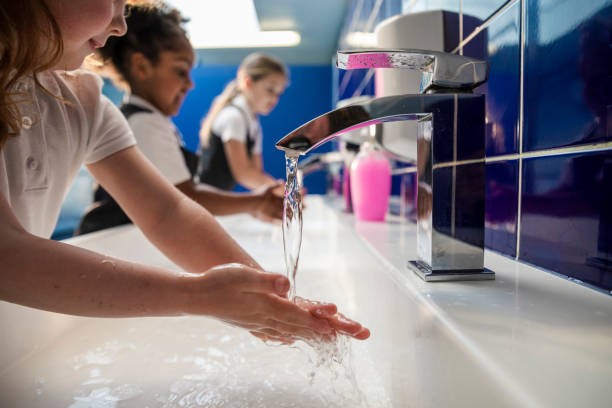
Walk into any school or daycare with a parent who's never been there before. Watch their eyes. They're not reading the mission statement yet. They're checking the floors, glancing at the bathroom door, and noticing whether the air smells fresh or off.
School cleanliness sends a message before a single word about academics gets said. It's often the first thing that tells a parent whether this is a place they can trust with their child, which is why many daycare owners invest in professional daycare center cleaning to make sure that message is a good one.
Curriculum is something parents have to take on faith. They can read about a teaching philosophy, but can't see it working in five minutes. Cleanliness is something they can see immediately.
A parent walking through a hallway doesn't need an explanation to notice sticky floors or a bathroom smell. Their brain processes that instantly, often before they've met a teacher.
This isn't shallow. It's a shortcut. Parents use what's visible to judge what's not, like how carefully staff handle food safety or supervision during nap time. If the visible parts of a school are well kept, parents assume the invisible parts are too. If they look neglected, that assumption flips just as fast.
For most parents, the first question isn't "will my child learn here." It's "will my child be safe here." A clean, well kept space answers part of that without anyone saying a word. Child safety in schools isn't only locked doors and sign in sheets, it's also dry floors, padded corners, and a space that feels looked after.
Cleanliness shows effort. Anyone can say they care about children, but fewer places show it in small, consistent ways, like wiping tables between activities or putting toys away neatly at pickup. A school that looks cared for sends a quiet message that the people running it pay attention to details, which usually extends to how they treat children too.
Daycare hygiene matters practically. Young children touch everything and stay close to each other most of the day. Doorknobs, tables, shared toys, and bathroom fixtures collect germs quickly.
Parents who've dealt with a string of colds become especially sensitive to this. A classroom that looks and smells clean suggests the school is working to reduce how illness spreads. One that doesn't can quietly raise a parent's guard. This is one reason regular education facility cleaning plays such a big role in keeping illness rates down and parents reassured.
Most parents visit a few schools before choosing one. These visits are short, sometimes 20 or 30 minutes, and parents absorb a huge amount in that window.
A clean environment during that tour does a lot of heavy lifting. It tells parents this is what the place normally looks like, not just on a good day. If something feels off, many quietly cross that school off their list, even if the curriculum sounded great on paper.
Two spaces get extra scrutiny without parents realizing it: bathrooms and play areas. Bathrooms feel personal, and a dirty one creates instant discomfort. Play areas matter because that's where parents picture their child spending most of the day. Toys piled up, visible dust, or a faint smell can undercut everything else about the visit.
Smell is one of the fastest ways a space communicates. A school that smells fresh or neutral feels cared for. One with a strong chemical smell, or no fresh air at all, leaves parents with a vague unease.
Clutter works the same way. Overflowing bins or hallways crowded with equipment suggest a place behind on basic upkeep, making parents wonder what else might be falling behind.
Many of these issues aren't from a lack of caring. Staff get used to the same space every day and stop noticing small problems:
None of these are major on their own, but a parent on a tour doesn't know that. They just see what's in front of them.
Improving facility maintenance doesn't require a renovation. It requires consistency in spaces parents actually walk through:
Consistent maintenance matters more than occasional deep cleaning. A school deep cleaned monthly but worn down otherwise still leaves a mixed impression. One tidied a little every day feels reliably clean, no matter when someone walks in.
Parent trust in schools often starts before a lesson plan gets mentioned. It starts with what they see, smell, and feel the moment they walk in.
Educational facility standards aren't just about meeting health codes. They're about showing parents, instantly, that this is a place where their child will be looked after.
A clean classroom, fresh smelling hallway, and tidy play area don't replace a strong curriculum, but they're often what gets a parent to trust that curriculum enough to give it a chance.
Why do parents care more about cleanliness than curriculum during a visit? Cleanliness is something parents can judge instantly, while curriculum quality takes time to observe, so cleanliness becomes the first trust signal.
What areas do parents notice most when touring a daycare or school? Bathrooms, play areas, and entryways get the most attention, since these spaces feel personal and are where children spend a lot of time.
Does a clean school really reduce how often kids get sick? Regular cleaning of high touch surfaces like doorknobs, desks, and shared toys can reduce how easily germs spread among children.
How often should classrooms be cleaned to maintain a good impression? Daily attention to high touch surfaces and a quick walkthrough of shared spaces works better than relying only on occasional deep cleans.
Can a strong curriculum make up for a school that looks unclean? It's difficult, since many parents form their first impression based on cleanliness and may not stay long enough to learn about the curriculum at all.