Businesses are outfitting offices, hotels, and clubs with custom pickleball sets. Here's what's driving the trend and what buyers should know.
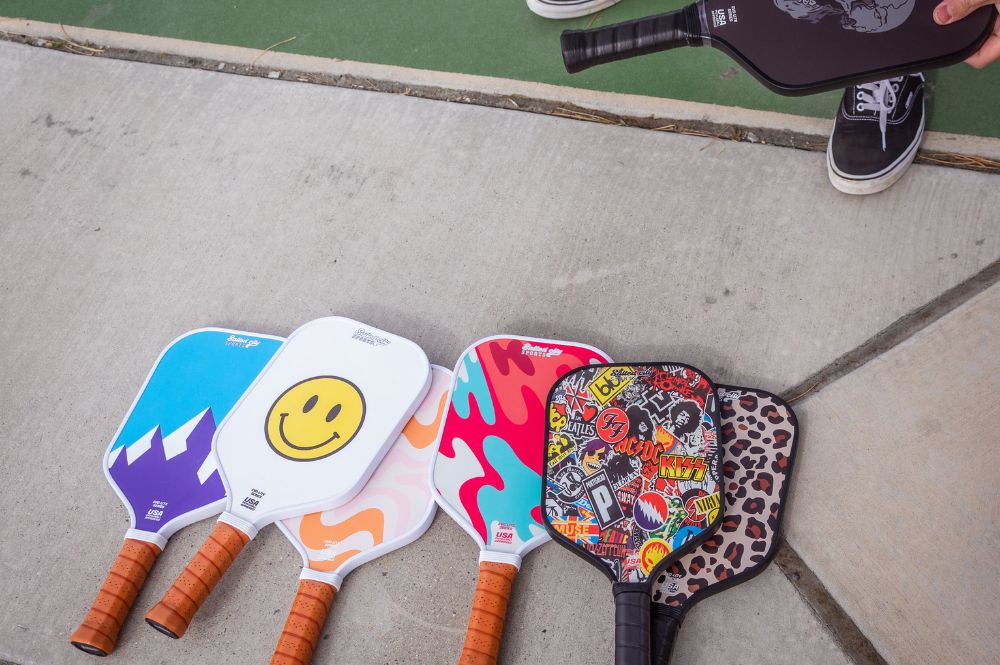
Walk into almost any corporate wellness event these days and you'll probably spot a pickleball paddle with someone's company logo on it. That's not a coincidence.
Pickleball has posted some of the fastest participation growth of any sport tracked in the United States, and businesses have noticed. It's easy to see why. The learning curve is short, the games are social by design, and the equipment is small enough to hand someone at a conference table without feeling silly about it.
So what changed? A few years ago, branded swag mostly meant tote bags and pens. Now it means paddles, and the shift says something about what companies actually want from a promotional item: something people use more than once.
Most traditional swag has a retention problem. A logoed pen gets lost. A stress ball gets tossed. A branded paddle, on the other hand, tends to stick around because it does something. People play with it, they talk about it, and they bring it to the next weekend match.
That distinction matters more than it sounds. Generic promotional items are a marketing expense that mostly disappears the day they're handed out. A well-made paddle or set is closer to a relationship investment, since it keeps showing up in someone's life long after the event ends.
There's also a demographic angle companies like. Pickleball skews across a wide age range, from twenty-somethings to retirees, which means a single branded set doesn't box a company into targeting just one type of client or employee.
Not every company is using pickleball the same way. Three patterns show up again and again.
Custom paddles and full sets have become a go-to option for client thank-you gifts, holiday packages, and tournament prizes. Unlike a coffee mug, a paddle invites the recipient to actually do something with the brand, which is exactly the point. A client who plays a match with a company's paddle remembers that company differently than one who received a calendar.
Wellness committees and HR teams have picked up on this too. Some companies now send branded pickleball kits to new hires as part of onboarding, since a small physical object delivered quickly after an offer is signed tends to land better than another email. Others use sets at offsites and team retreats, where a court and a few paddles do more for morale than another slide deck ever could.
This is the part most articles on this topic skip entirely, and it's arguably the bigger story. Hotels, resorts, gyms, HOAs, and municipal recreation programs aren't just handing out branded paddles as gifts. They're installing pickleball as a standing amenity, complete with nets, court markers, and equipment that guests or residents can check out or keep.
For a resort, a pickleball court with quality gear isn't a marketing giveaway. It's an experience that shows up in reviews and repeat bookings. For an HOA or a residential community, it's an amenity that affects property appeal. That means the buying decision looks less like ordering a box of swag and more like a facilities procurement project, with different questions about durability, replacement cycles, and supplier reliability.
Companies that supply this side of the market, including PicklePro Shop, a wholesale pickleball supplier launched in 2020 that serves hotels, resorts, HOAs, gyms, and recreation facilities, have built their offering around exactly that need. Instead of a one-time order, facilities need a steady supply relationship, since equipment for high-traffic use wears out and needs replacing on a schedule.
Here's something a lot of gifting guides gloss over. Not all paddles are built the same, and that matters more for a branded set than people assume.
A cheap paddle with thin materials might look fine in a product photo, but it won't survive months of guest use or a busy corporate wellness program. Paddle faces made from raw carbon fiber, paired with a foam or honeycomb core and a thermoformed unibody frame, tend to hold their shape and grip better over repeated play. That matters for branding too. A paddle that chips or delaminates after a few weeks doesn't exactly reinforce a premium image.
Price matters as well. Many performance paddles now sit under 200 dollars while still using higher-grade construction, which has made it realistic for businesses to order in bulk without sacrificing quality for cost. And a fitted protective cover, something several suppliers now include standard, helps a branded paddle actually survive transport and storage instead of getting scratched up in someone's gym bag.
If you're the one signing off on a branded pickleball order, a few practical questions will save you a headache later.
Ask about warranty coverage first. Junior products typically carry shorter warranty windows (often around six months) while adult performance paddles usually run closer to a full year. Know which tier applies to what you're ordering.
If kids will be using the equipment, ask whether it's been lab tested for safety, including things like lead content and flammability. This isn't a small detail for a school program or a family-focused resort.
Shipping logistics deserve attention too, especially for multi-property groups or international locations. Facilities in the Caribbean or Latin America, for example, often route orders through a Florida-based freight forwarder rather than shipping directly, which affects both cost and timeline.
Finally, ask about reorder support. A facility that standardizes its equipment list once and can reorder the same SKUs later avoids a lot of procurement friction down the road.
Budgets vary widely depending on what a business is actually trying to do. A simple branded paddle set for a client gift or small team event might run in the tens of dollars per unit. A full facility package, with nets, court markers, and multiple paddle tiers for a hotel or recreation center, is a bigger line item, but it's also a multi-year asset rather than a one-time handout.
That's really the throughline across all of this. Whether it's a client gift, an onboarding kit, or a guest amenity, businesses are treating pickleball equipment less like disposable marketing material and more like something with lasting value. Not a bad bet, considering how many people are picking up a paddle for the first time every year.
Pickleball gear gets used repeatedly instead of sitting in a drawer, and the sport's broad age appeal means it works for clients, employees, and event attendees alike.
A single paddle is typically used for gifting or giveaways. A full set usually includes paddles, balls, a bag, and sometimes a net, and it's more common for events, facilities, or team programs.
Yes. Many hotels, resorts, HOAs, and recreation centers now order wholesale pickleball packages to offer courts as a standing guest or resident amenity rather than a one-time promotion.
Coverage varies by product tier. Junior paddles commonly carry shorter warranties, often around six months, while adult performance paddles frequently carry closer to a full year, though buyers should confirm terms with the supplier directly.
No. Many suppliers also offer logo placement on bags, ball containers, and water bottles, which lets businesses build a more complete branded kit beyond just the paddle face.
Timelines depend on order size and destination. Domestic orders often ship within a few business days, while international deliveries routed through a freight forwarder can take several weeks depending on customs and transit.
Reputable suppliers lab test junior equipment for safety factors like flammability, lead content, and phthalates. It's worth asking any supplier for documentation before ordering for a youth or family program.