Let's discuss the Future of Cross-Border Payments.
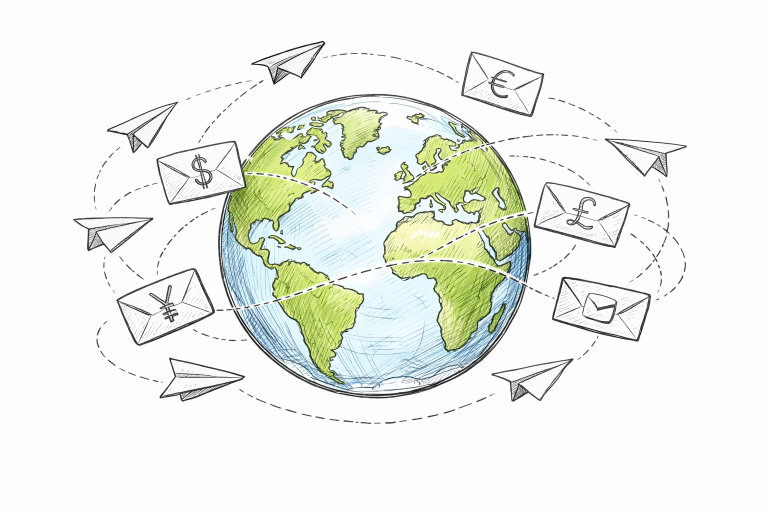
Cross-border payments are evolving rapidly as new technologies and global economic shifts drive both innovation and complexity in international transactions. An efficient global financial infrastructure is critical for trade, commerce, and personal remittances, yet the journey toward seamless cross-border payments remains a work in progress. The global movement of money across borders directly impacts economies, businesses, and individuals, making advancements in this space crucial for financial inclusion and growth.
Significant investments and collaborative efforts are underway to modernize the payment process and reduce friction. However, the systems that underpin cross-border transactions are often challenged by high costs, slow processing, and inconsistent access. As international commerce becomes increasingly borderless, especially in the wake of digital transformation and new monetary tools, seamless payment solutions are more important than ever. These trends highlight a pivotal moment in the global payments landscape.
The global cross-border payments market is booming, reaching an estimated $238 billion in value and showing no signs of slowing. B2B payment flows are forecasted to reach $50 trillion by 2032, reflecting the growing demand from multinational corporations and small businesses alike. Despite robust growth, the legacy infrastructure supporting these transfers involves multiple intermediaries, opaque fee structures, and settlement delays that can extend for days. The European Central Bank reports a 20 percent decrease in correspondent banking relationships since the mid-2000s, mirroring the industry’s shift away from high-risk or less profitable payment corridors.
This shrinking network heightens the challenge of moving money across select geographies, underscoring the need for innovative approaches and new partnerships. As remittance flows and cross-border e-commerce volumes continue to soar, pressure mounts on traditional structures to deliver more cost-effective, timely, and transparent services.
The landscape for cross-border payments is experiencing a technological leap forward, led by blockchain solutions, stablecoins, and the development of central bank digital currencies (CBDCs). In 2025, stablecoins accounted for $400 billion in payment volume, most of it driven by B2B needs. While these digital assets can simplify settlement and reduce costs, they alone cannot solve the systemic inefficiencies that plague the $1 quadrillion global payments ecosystem. Blockchain-based networks aim to move funds across borders more transparently and securely, though widespread adoption faces challenges related to scalability, interoperability, and regulatory clarity.
Governments and industry players are cautiously optimistic about how these innovations might enable faster, more predictable international payments, while also raising questions regarding security, compliance, and consumer trust.
FinTech firms have emerged as catalysts for change, creating interoperable infrastructures and connecting disparate payment systems. For example, PayPal’s introduction of PayPal World promises to knit together major digital wallets and payment platforms, simplifying multi-currency and cross-border transactions for billions of users worldwide. By eliminating barriers and automating compliance checks, these new networks enhance the customer experience while streamlining backend operations.
FinTech companies also tend to embrace advanced analytics, data-driven risk management, and flexible APIs, all of which accelerate payment innovations that larger, slower-moving institutions often struggle to implement.
Global regulators play a crucial role in shaping the future of cross-border payments. The G20 has set ambitious targets to make cross-border payments faster, cheaper, and more transparent by 2027. However, real progress has been slower than hoped. In 2025, a progress report revealed serious obstacles to meeting the G20 goals on schedule, as infrastructure overhauls and cross-country coordination have proven challenging.
Harmonizing regulations, safeguarding against financial crime, and building the foundational standards for global payment systems all require sustained multilateral effort. As payment platforms experiment with digital assets, compliance officers must continually adapt to shifting legal frameworks and anti-money laundering requirements.
True interoperability is the cornerstone of next-generation cross-border payments. New proposals by the Federal Reserve, such as allowing third-party intermediaries to participate in FedNow transfers, could pave the way for extending instant payments to international flows. Yet technical connectivity must be complemented by policy harmonization, alignment of standards, and robust cybersecurity measures. Interoperability is not simply about linking technologies but about fostering coordinated frameworks that work worldwide.
The future of cross-border payments depends on realizing seamless interoperability across instant payment hubs, digital currencies, and decentralized tools. Central banks, commercial banks, FinTech companies, and global standard-setting bodies must continue to collaborate closely. Scalable, low-cost, and secure international payments would support global trade, promote financial inclusion, and boost economic resilience.
Major advancements still require overcoming barriers related to outdated infrastructures, geopolitical tensions, and fragmented regulatory environments. Developments such as the introduction of CBDCs and real-time payments are promising, but ongoing research, testing, and international dialogue are essential for widespread adoption and lasting change.
In summary, while the journey toward streamlined cross-border payments has seen remarkable progress, significant challenges remain. Global collaboration, continuous innovation, and a commitment to regulatory modernization are essential for building an efficient, secure, and inclusive global payments ecosystem.